A Korean cook’s idea of retirement is to sell affordable meals in a neighborhood kopitiam
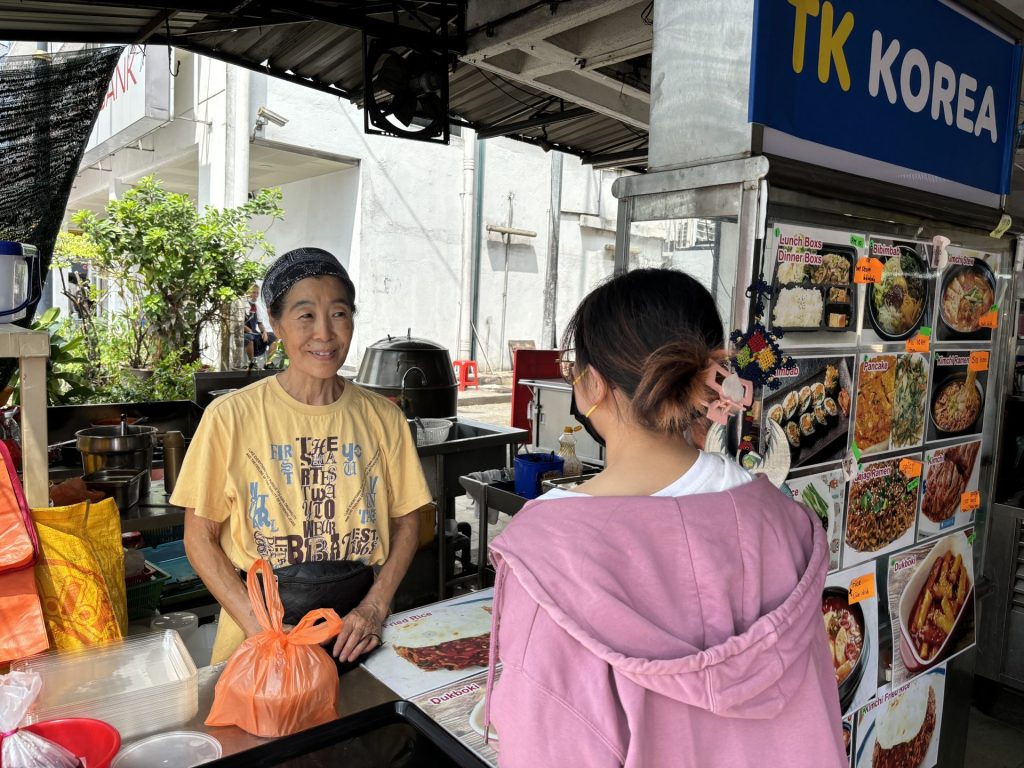
IT’s sweltering hot at noon, and there isn’t the slightest reprieve from the heat at the small stall at the corner coffee shop. Customers keep lining up and placing their orders, even though the server says it will take 40 minutes for the food to be ready. Cook Ahila Kil wears a headband to stop the sweat from dripping to her face, but she seems unfazed by the heat or the hard work of cooking up every dish from scratch.
“This is my retirement,” she says with a grin and a chuckle.
The 70-year-old Korean from Seoul says she opened the stall three months ago after she retired from a reputable Korean restaurant in Kuala Lumpur. But she likes cooking very much and didn’t want to stop working.
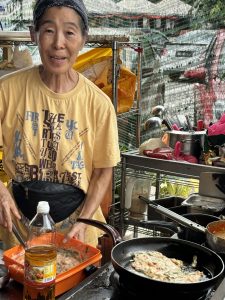
“Why should I stop working at 70? Tun Mahathir is 90 plus and still working. I am 20 years younger,” says Kil who first came to Malaysia in 1998 while working for a Japanese company. Over the years, she has left and came back, on and off, and is happy to stay on in Malaysia for now. Her only son also joins her in Malaysia, on and off.
“When I first came here, Korean food was not popular. Now everyone knows kimchi. I opened a stall like this because I want people to be able to eat Korean food. I just want to cook, and meet people and talk to them,” says Kil whose RM10 meals went viral after it was featured in some tik tok videos. The irony is now Kil is too busy to talk to customers.
“I sell my meals at RM10 as a way to give back to Malaysia. I am 70, what do I need a lot of money for. I don’t need to buy beautiful clothes. But I like to cook and work,” she says, shrugging at the criticisms thrown at her for her pricing. So far, she has sustained the business with the help of two workers.
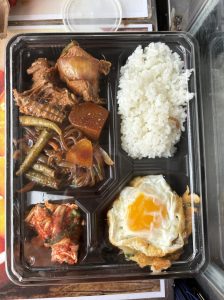
Kil’s menu includes lunch and dinner box with rice and side dishes, bibimpap, kimbap, jeon (pancakes), sudubu (tofu stew), jajag rice and jajag ramen and dukboki (rice cakes). She also sells dishes made with kimchi such as kimchi fried rice, kimchi stew and kimchi ramen. Every meal cost RM10 each.
Kil’s stall, TK Korea, opens at 9am every day except Sunday at Restoran Chuan Hupp in Ampang, Kuala Lumpur.
“I close by 4pm and rest on Sunday, so that my workers can rest. I am strong and I can work.
“To me, this is retirement because I can set my working hours. That’s why I don’t open until 7pm,” says Kil who also used to teach Korean cooking.
She used to teach people how to make kimchi, in her easy way, and says the secret is to add a few tablespoons of cooked rice to ferment the kimchi. As she cooks, she is also happy to recite her recipes.
“Add yong pal (onions), gam ja (potatoes), eggs and flours, and whatever vegetables you have at home. This is poor man’s food. We make use of whatever we have to make delicious food.
“It’s like kimchi. When we were poor, we only had kimchi. But we cooked kimchi fried rice, kimchi pancake and kimchi stew,” says Kil who also sells kimchi at her stall but they quickly run out.

Post a Comment
 admin
Read More
admin
Read More
Joys of Late Fatherhood With John So
Late parenthood doesn’t give JOHN SO much time to learn from trial and error alone…
 admin
admin 
Post a Comment
admin
Read More
Through The Lens of Famous Photographer Kenny Loh As The Years Go By
IF you look through Kenny Loh’s camera lens you will see a big heart. Well,…
admin 
Post a Comment
admin
Read More
Horse Back Riding Travels For KP Chan
As one enters into the twilight years, the question of ‘What should I do?’ comes…
admin